


A 6-Month Turnaround in Stage IV Triple-Negative Breast Cancer (TNBC): Journey with ECCT
- Jul 31, 2025
- 3 min read
Sarah Johnson, from the United States diagnosed with Stage IV Triple-Negative Breast Cancer (TNBC) who demonstrated notable clinical improvement over a six-month period while undergoing conventional oncology treatment together with ECCT used as a complementary therapy aimed at supporting general health and quality of life.
At the time of diagnosis, Sarah was found to have advanced metastatic TNBC, confirmed through PET-CT imaging and laboratory investigations. Her baseline PET-CT scan revealed extensive FDG-avid lesions, indicating high metabolic activity associated with widespread metastatic disease.
The initial imaging findings included:
Multiple metastatic lesions throughout both lungs
Enlarged and metabolically active mediastinal lymph nodes
Several metastatic deposits in the liver and lung
Bone metastases affecting the spine and pelvis
Taken together, these findings reflected a significant systemic tumour burden, which is characteristic of late-stage TNBC.
At presentation, she was experiencing several symptoms including:
Persistent fatigue and low energy levels
Reduced appetite and mild weight loss
Intermittent bone discomfort, particularly in the back and pelvic region
Reduced stamina and difficulty maintaining normal daily routines
Baseline laboratory tests reflected the physiological stress of the disease. Her results showed mild anemia, elevated inflammatory markers, and tumour marker levels above the normal range, findings that can be associated with active metastatic cancer.
Following diagnosis, she began systemic treatment under the supervision of her oncology team in the United States. Her treatment plan included conventional cancer therapies aimed at controlling disease progression and managing metastatic lesions. The disease continue to progress after completion of 6 cycles of chemotherapy and hormonal therapy.
She later include ECCT as part of her journey fighting cancer routine. The ECCT sessions were performed regularly over the course of the treatment period while she continued all medical care and monitoring under her oncology team.
Approximately six months after the initial scan, a follow-up PET-CT was performed to assess her response to treatment. The imaging comparison demonstrated a substantial reduction in metabolically active tumour burden, estimated to be approximately 70% lower compared with baseline imaging.
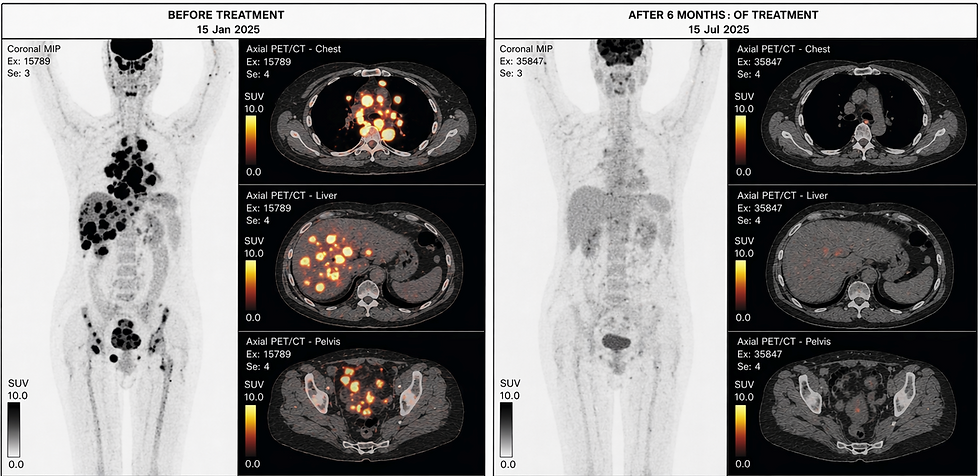
Radiologic observations included:
Marked reduction in FDG uptake within pulmonary lesions, with several areas demonstrating minimal residual activity
Significant decrease in mediastinal lymph node activity and size
Reduction in metabolic activity of liver metastases, with some lesions appearing considerably smaller
Improvement in skeletal metastatic activity, with decreased FDG avidity in several bone lesions
Overall, the imaging findings were consistent with a strong partial metabolic response, indicating that the tumour burden had significantly decreased during the six-month treatment period.
During follow-up, laboratory tests also showed encouraging improvements consistent with her imaging response.
Observed trends included:
A decline in tumour marker levels, suggesting reduced tumour activity
Improved hemoglobin levels, indicating recovery from earlier anemia
Stable liver function tests, despite earlier liver involvement
Lower inflammatory markers, suggesting improved systemic condition
These laboratory findings were consistent with the improvements seen on imaging and indicated a better overall physiological state compared with her initial presentation.
Equally important were the changes observed in Sarah’s physical wellbeing and daily functioning.
Over the course of treatment, she gradually reported noticeable improvements, including:
Increased energy levels and reduced fatigue
Improved appetite and nutritional intake
Better sleep quality
Reduced bone discomfort
Increased ability to perform daily activities independently
Family members also noticed that she appeared stronger, more active, and more positive compared with the period shortly after diagnosis.
These improvements allowed her to slowly resume more of her normal daily routines and spend more meaningful time with family and friends.
After six months of treatment and supportive care, Sarah demonstrated several meaningful improvements, including:
Approximately 70% reduction in tumour burden on PET-CT imaging
Improvement in key laboratory markers associated with disease activity
Noticeable improvement in physical strength, energy, and daily functioning
Her six-month follow-up showed significant radiologic improvement, stabilization of important laboratory markers, and meaningful gains in physical wellbeing. While continued monitoring remains essential, the progress observed during this period represents an important step forward in her ongoing cancer journey.


Comments