


Her breast tumour resolved with ECCT treatment, twice pre and post pandemic
- Jan 10
- 3 min read
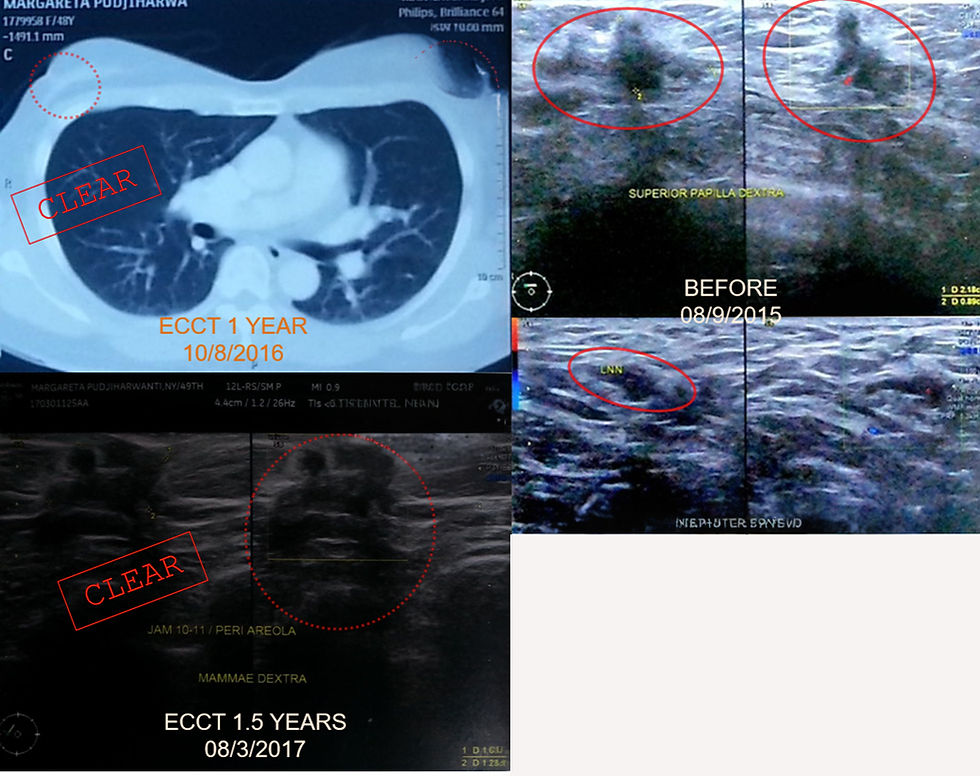
breast tuHer breast tumour resolved with ECCT treatment, not once but twice! Diagnosed with Stage 2–3 breast cancer in 2013, Mrs. Margareta continued searching for an alternative to surgery until she eventually discovered ECCT. She began using ECCT in 2015, and within one year the lump had disappeared. However, ten years later, post pandemic, a lump reappeared at the site of the original mass, which had already become a keloid scar. She resumed using ECCT alone, and the lesion eventually resolved again, leaving only the keloid.
After traveling all the way to Penang, Mrs. Margareta was told by her doctor:
"There is nothing more that needs to be done, Ma'am. The cancer is no longer there. Only the keloid remains."
Mrs. Margareta then revealed that she had been using ECCT throughout this period. Her doctor replied:
"Just continue using the device."
Mrs. Margareta was first diagnosed with breast cancer in 2013. Ultrasound and mammography showed a mass in her right breast, while a fine-needle aspiration biopsy (FNAB) indicated malignancy. Her physician recommended mastectomy, likely to be followed by chemotherapy and/or radiotherapy.
She chose not to proceed with the recommended treatment and instead pursued various herb alternative therapies for two years. According to her, her overall condition improved, but the breast mass remained. Follow-up ultrasound and mammography after nearly two years of alternative treatment still showed a 2–3 cm lesion in the right breast, along with a small axillary lesion measuring less than 1 cm. Retraction around the biopsy site and nipple area had increased. Clinically, the disease remained at approximately Stage 2–3, similar to two years earlier. Overall, the disease progression appeared relatively controlled during those two years.
Mrs. Margareta continued searching for alternatives to avoid surgery until she eventually encountered ECCT. In September 2015, she flew to obtain an ECCT device, bringing her most recent mammography and ultrasound results together with her earlier biopsy findings.
Just as initial start of treatment, Mrs. Margareta experienced slightly noticeable but not extreme changes in urine, sweat, and stool odor. As these reactions occurred, ultrasound demonstrated reduction of the breast mass from approximately 2 cm to 1 cm within just few month, representing relatively rapid shrinkage.
After one year of ECCT use, CT scans reportedly showed no detectable breast mass. Retraction at the biopsy site remained but was less pronounced. Ultrasound findings showed only residual shadowing where the tumor had previously been located, possibly representing residual cholesterol deposits from dead cells. Clinically, only mild keloid formation remained around the biopsy site, while the remainder of the breast appeared essentially normal.
Mrs. Margareta did not undergo a core biopsy or immunohistochemistry (IHC) testing, so hormone receptor status and HER2 expression were never determined. Consequently, the exact tumor subtype and biological drivers remained unknown.
Throughout more than ten years since her original diagnosis, Mrs. Margareta rarely appeared seriously ill. She maintained normal daily activities and continued operating her pharmacy as her career. Due to her daily schedule rapidly building up, she eventually discontinued ECCT after scans showed no apparent abnormalities.
However, during the COVID-19 pandemic, she noticed changes developing again around the keloid scar at the original biopsy site. Ultrasound revealed a new mass. She therefore resumed regular ECCT treatment. After approximately one year, the lesion again disappeared and was declared clear, leaving only the keloid scar.
Doctors in Penang reportedly advised that no further intervention was necessary and encouraged her to continue using ECCT as a preventive measure against recurrence.
Now more than 13 years after her original breast cancer diagnosis, and over 11 years after first beginning ECCT, Mrs. Margareta remains healthy and active, carrying out daily activities and traveling both domestically and internationally without limitations.


Comments