


Neuroendocrine cancer diffuse non-Hodgkin’s lymphoma of 10cm shrunk to 2cm
- Dec 31, 2025
- 2 min read

The cancer in Roni’s neck continued to grow despite having undergone chemotherapy for 6 cycles, causing persistent coughing, difficulty swallowing, and nightly episodes of chills and fever.
Initially, he and his wife refused to continue further chemotherapy because after the biopsy and completion of the first 6-cycle chemotherapy regimen, the tumor kept enlarging. He wanted to rely only on ECCT and did not wish to continue chemotherapy as recommended by his doctor.
CT scan results showed a mass measuring nearly 10 cm, compressing major blood vessels on the right side of his neck, which had already been infiltrated by the tumor. Biopsy results suggested a neuroendocrine cancer diffuse non-Hodgkin’s lymphoma, which had infiltrated striated (skeletal) muscle tissue, muscles essential for head and neck movement, as well as swallowing and speech.
This cancer is an aggressive type originating from neuroendocrine cells distributed throughout the body (lungs, digestive system, etc.). It grows rapidly and has a high potential to spread. It is characterized by abnormal cells that are difficult to distinguish from normal cells and requires special tests for diagnosis.
Destroying cancer cells with ECCT is relatively not a major issue, especially for high-grade tumors, as the cancer cells tend to die relatively quickly. However, too many dead cancer cells in the body can overwhelm the system due to a cytokine surge, which is the body’s immune response to clearing dead cells. Therefore, medical intervention is needed to prevent chronic inflammation, using a combination of chemotherapy to suppress excessive immune response.
Mas Roni and his wife eventually accepted the recommendation to use ECCT while continuing medical treatment under the supervision of the oncologist who initially examined him. He used the device for 2 months before resuming a second cycle of chemotherapy (6 sessions) over 4 months, while continuing ECCT use.
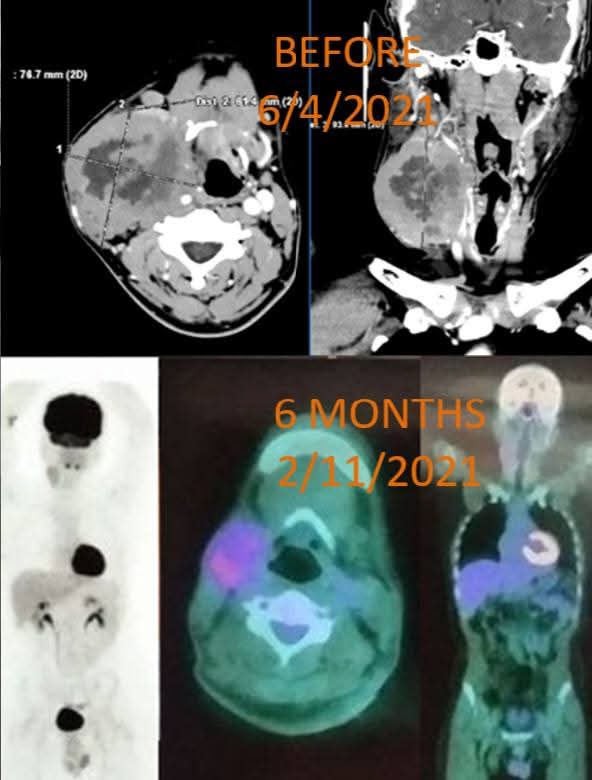
The tumor shrank significantly after just one session of the second chemotherapy cycle. He completed all 6 chemotherapy sessions while continuing to use the ECCT device. A PET scan performed after 6 months showed that the neck mass had reduced from 10 cm to 2 cm. Other parts of the body were relatively clear, with no detectable spread.
Roni then continued using ECCT alone to fully resolve the remaining neck mass. After 2 years of use since first starting the device, his condition is relatively normal. His body weight has returned to what it was before his illness.


Comments